


Guns of Glory: Lost Island
4.334.32K Reviews
App Specs
- Version
- 13.25.0
- Updated On
- License
- Free
- Downloads
- 50,000,000+
- Developer
- FunPlus International AG
- Categories
- Strategy
- Platform
- Android
Screenshots


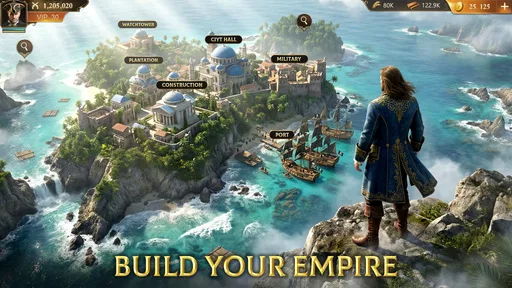
 Analysis by AppCompare
I tend to enjoy strategy games most when they ask me to think beyond the next upgrade. Guns of Glory: Lost Island has that familiar mix of building, resource gathering and conflict, but its island setting gives those decisions a sense of discovery. I like having a story thread to follow while I work out how to grow, though the game’s longer-term demands mean it suits players who enjoy checking in regularly more than anyone looking for a quick, self-contained match.
Who will enjoy its pace
This is a free strategy game from FunPlus International AG, rated Everyone 10+. It has a 4.3 average from around 582,000 ratings, and more than 50 million installs. Those figures suggest a sizeable audience, but they don’t tell you whether its style will fit your routine. I’d recommend it to players who enjoy gradual development, planning, and the social side of coordinating with other people. If you prefer a strategy game that starts and finishes in one sitting, a compact tactics game is likely a better match.
There is a story-led hook here, yet the central appeal is not simply reaching the next plot beat. I found myself weighing what to develop, when to conserve resources, and how much attention I wanted to give the wider competition. That makes the game more absorbing than a straightforward island-building pastime, but it also means progress can feel less satisfying if you only want to log in occasionally and ignore the strategic layer.
Decisions that carry forward
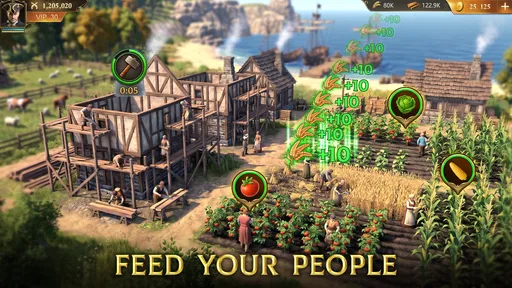
The opening is approachable: gather resources, build up your settlement, recruit followers and train troops. The trick is to treat those actions as connected choices rather than a checklist. An upgrade can make your base feel stronger, but it also uses resources that might be more useful for another part of your plan. I get more out of the game when I pause to ask what I want to accomplish next instead of spending everything as soon as a button becomes available.
That small habit matters most when I have only a few minutes to play. I can use a short visit to check my position, decide which development is most useful, and leave with a clear next step. Longer sessions work better when I want to explore the story or think through how my choices fit into a broader plan. It is not necessary to turn every login into a major strategy meeting, but a little intention makes the progression feel less like tapping through prompts.
The island framing also gives the game a useful sense of direction. Discovery provides a reason to keep moving forward, while kingdom growth supplies the practical decisions in between. I enjoy that combination, though I would not expect the exploration angle alone to make this feel like a free-roaming adventure. Its strongest pull is the ongoing strategy, with the setting and narrative giving that progression a theme.
Alliances, trust, and timing
Joining other players is one of the more meaningful choices because it changes the experience from a private building project into a social strategy game. An alliance can offer a reason to coordinate and think about other players’ plans, but it also asks for some trust and attention. I would look for a group whose activity suits my own schedule rather than joining one that seems demanding just because it appears powerful.
Worth Reading Before You Choose

Flipboard Shows What News Apps Must Do Beyond the Feed

Switching to Android Auto Means Rethinking Your Driving Routine

Google Calendar Makes a Crowded Week Easier to Manage

Ludo King Makes the Most of the Minutes Between Plans

Baby Panda World Brings Quick Play to Modern Phones, but Its Game Library Feels Busy

ESPN’s Live Game View Makes Following Close Games Easier
A practical approach is to observe how an alliance communicates before committing to its expectations. If I am playing casually, I want cooperation that makes the game more enjoyable, not a new obligation that turns every session into a duty. Players who like shared goals and discussing tactics may find this element a major strength; those who would rather make every decision alone may find the social layer distracting.
Timing is part of the decision-making, too. I try not to treat every rival or threat as something that must be answered immediately. Taking a moment to consider whether I am prepared, what I would spend by reacting, and whether a different priority matters more can prevent an impulsive move from disrupting my longer plan. That kind of restraint is a useful counterweight to the game’s steady stream of things asking for attention.
Progress without turning it into a chore
The game keeps offering reasons to return, from challenges and rewards to kingdom improvements and discoveries. That steady activity can be motivating, but it is also where I notice the risk of turning play into maintenance. If I log in only to clear every task, the island starts to feel like a queue rather than a place I want to explore. I prefer choosing one or two goals for a session and letting the rest wait.
There is a trade-off between immediate gratification and saving resources for a more useful step later. A tempting upgrade may improve one part of the kingdom, while holding back can leave me better placed to pursue a more important development. I have found it helpful to decide on a short-term priority before spending. It does not require a complex spreadsheet; even a simple “build first, then train” plan can make limited playtime feel more deliberate.
Patience is especially important for anyone who dislikes waiting for incremental progress. The game is built around developing a kingdom rather than delivering a complete tactical challenge in every session, so it may not be the best choice if you want constant, immediate payoffs. Players who enjoy watching a plan take shape over time are more likely to appreciate that rhythm.
The Setup: A Mysterious Island Awaits
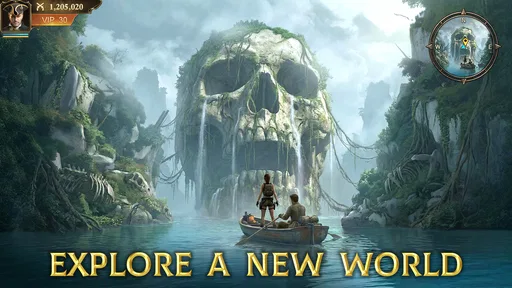
When I first launched Guns of Glory: Lost Island, I was immediately drawn into the mysterious lore surrounding the game. The premise? You've crash-landed on a deserted island, and it’s up to you to build a kingdom from scratch while uncovering the secrets buried deep within the island. Sounds intriguing, right?
The game does a fantastic job of blending exploration with strategy, setting you on a mission to not only survive but thrive. The narrative unfolds as you progress, with each new discovery adding layers to the story. I found myself genuinely curious about what lay around the next corner.
Gameplay: Strategy Meets Adventure
The core of the game is all about building and expanding your kingdom. As you gather resources, recruit loyal followers, and train troops, you'll need to strategize carefully. The game mechanics are intuitive, making it easy for newcomers to jump right in, while still offering depth for seasoned gamers.
One of the aspects I particularly enjoyed was the ability to form alliances with other players. This social element adds a layer of complexity, as you must decide whom to trust and when to strike out on your own. The community is active, and it's not uncommon to find yourself strategizing with players from all over the world.
Visuals and Sound: Immersive and Engaging
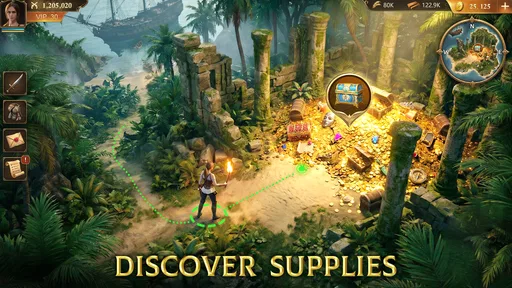
The graphics in Guns of Glory: Lost Island are top-notch. The island is beautifully rendered, with lush forests, towering cliffs, and hidden caves that create a truly immersive environment. The attention to detail is evident, and I often found myself pausing just to admire the scenery.
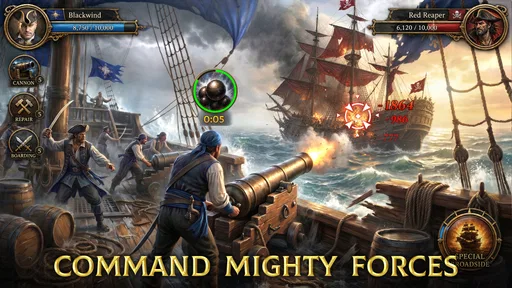
The sound design complements the visuals perfectly. From the rustling of leaves to the distant calls of birds, the audio adds to the immersive experience. It's the little things, like the clang of swords during battle or the crackling of a campfire, that really bring the game to life.
Challenges and Rewards: Keeping You Hooked
What keeps me coming back is the constant stream of challenges and rewards. Whether it's fending off attacks from rival factions or discovering hidden treasures, there's always something to do. The game balances this well, ensuring that you're never overwhelmed but always intrigued.
There's a satisfying sense of progression as you upgrade your kingdom and unlock new abilities. Each achievement feels earned, and the rewards are generous enough to keep you motivated without feeling like a grind.
Spending and expectations
The game is free to start, with in-app purchases ranging from $0.99 to $99.99 per item. I would treat those purchases as optional rather than a shortcut I need to take. Before spending, it is worth asking whether an item supports a goal I already care about or simply makes the next step feel faster. Players who prefer a fixed-price game with no purchase prompts may be more comfortable with a premium strategy title instead.
For a realistic everyday routine, I can see this fitting into a morning check-in and a later, longer session when I have time to think about development or coordinate with an alliance. If I only have a brief break, I can choose a specific task and stop there. That works better for me than trying to complete every available activity, especially on days when I cannot keep up with a social group’s pace.
It is also worth setting expectations about the kind of strategy involved. This is not the same as a turn-based tactics game where each encounter is a contained puzzle and every move is resolved on a compact board. Compared with those alternatives, this game emphasizes ongoing kingdom growth and player relationships. That can be more compelling if I want a world to return to, but less appealing if I want tightly bounded matches and a clean ending after each round.
Depth over time, with a few caveats
Long-term play rewards attention to priorities more than frantic activity. I get better results from keeping a simple mental queue—what I am developing, what resources I should preserve, and whether alliance commitments fit my available time—than from reacting to every new prompt. This is a small but useful way to keep the experience under my control. It also helps me notice when a goal has stopped being fun and is only consuming time.
The game’s version is 13.11.0, and it requires Android 6.0 or later. That makes the platform threshold clear for Android players, while the Everyone 10+ rating gives families a basic age-guidance reference. In practice, I would still consider whether the ongoing competitive and social style suits the particular player, rather than relying on the rating alone to decide whether it is a good fit.
My main reservation is the commitment its structure can encourage. A growing kingdom and an active alliance can make it tempting to check back more often than I planned. That is not automatically a flaw—the routine is part of the appeal for many strategy fans—but anyone who wants a game that stays fully satisfying with rare, irregular visits should think carefully before investing in its long-term rhythm.
Final Thoughts: A Must-Try for Strategy Enthusiasts
All in all, I find this a strong option for strategy fans who enjoy building toward a goal, balancing resources, and sharing plans with other players. The story and island presentation give the progression personality, while the continuing challenges provide reasons to return. I would steer away from it if I wanted short, self-contained battles or disliked games that invite regular check-ins; a compact tactics game would suit those needs better.
If you're ready to embark on a journey filled with mystery, strategy, and adventure, then give it a try and see if you have what it takes to conquer the island. Trust me, you won't be disappointed.
Pros
- Engaging strategic gameplay keeps you hooked.
- Stunning graphics enhance the immersive experience.
- Team cooperation is highly rewarding.
- Regular updates with new content and events.
- In-game chat fosters community and alliances.
Cons
- Requires stable internet for smooth play.
- In-app purchases can be quite pricey.
- Initial learning curve can be steep.
- Some may find the ads intrusive.
- Battery consumption is relatively high.
FAQs for Guns of Glory: Lost Island
What is the primary objective of Guns of Glory: Lost Island?
In Guns of Glory: Lost Island, the primary objective is to build and expand your empire while navigating the challenges of a mysterious island. Players need to strategize, form alliances, and engage in battles against enemies to gather resources, enhance their bases, and ultimately become the strongest ruler on the island.
Is Guns of Glory: Lost Island free to play?
Yes, Guns of Glory: Lost Island is free to download and play. However, it offers in-app purchases that can enhance gameplay by providing additional resources, speed-ups, and exclusive items. Players can enjoy the game without spending money, but some features may be more easily accessible with purchases.
What are the system requirements for Guns of Glory: Lost Island?
Guns of Glory: Lost Island requires a device running on Android 4.4 or higher, or iOS 9.0 and above. It is recommended to have at least 2GB of RAM for optimal performance. Ensure your device has sufficient storage space and is connected to a stable internet connection for the best experience.
Can I play Guns of Glory: Lost Island with friends?
Yes, Guns of Glory: Lost Island offers multiplayer features, allowing you to connect and play with friends. You can form alliances to collaborate on strategic battles, share resources, and support each other in expanding your empires. This social aspect enhances the gameplay and helps in achieving mutual goals.
Are there any tips for beginners in Guns of Glory: Lost Island?
For beginners, it's crucial to focus on building a strong base by upgrading buildings and training troops. Joining an active alliance early on can provide support and resources. Participate in events and quests for rewards, and always keep an eye on your resources to ensure steady growth. Strategic planning and patience are key to success.


